Urinary Fistula
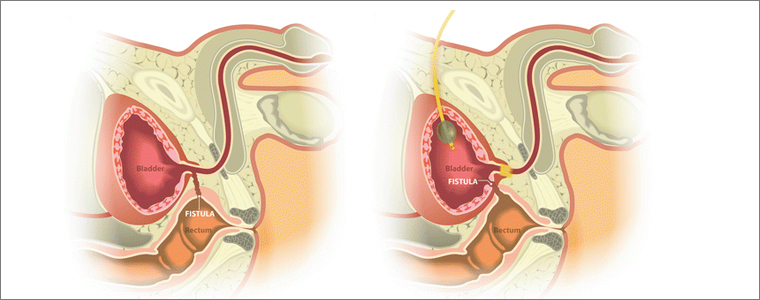
What is a Urinary Fistula?
A Urinary Fistula is an abnormal connection between the urinary tract and another organ, such as the bladder, urethra, or kidneys, and can also involve the skin. This condition disrupts the normal flow of urine, causing it to leak into other parts of the body.
How common is a Urinary Fistula?
Urinary Fistulas are relatively rare but can significantly impact quality of life. They are more common in women, often resulting from childbirth complications, surgeries, or certain medical conditions.
What are the symptoms of a Urinary Fistula?
• Continuous leakage of urine
• Recurrent urinary tract infections (UTIs)
• Foul-smelling vaginal discharge
• Pain during urination or intercourse
• Skin irritation or sores near the affected area
What causes a Urinary Fistula?
• Childbirth complications – Prolonged labor or trauma during delivery can cause fistulas.
• Surgery – Surgical procedures on the urinary tract or pelvic area can inadvertently create fistulas.
• Radiation therapy – Treatment for cancers in the pelvic region can damage tissues, leading to fistula formation.
• Infections – Severe infections or abscesses in the urinary tract or surrounding tissues can cause fistulas.
• Inflammatory diseases – Conditions like Crohn’s disease or diverticulitis can lead to fistulas.
How is a Urinary Fistula diagnosed?
• Medical history and symptoms – Review of medical history and discussion of symptoms.
• Physical examination – A thorough pelvic or abdominal exam may reveal signs of a fistula.
• Imaging tests – Ultrasound, CT scans, or MRI to visualize the fistula.
• Cystoscopy – Insertion of a thin tube with a camera into the bladder to inspect for abnormal connections.
• Dye tests – Injection of a dye into the bladder or urinary tract to help identify leaks and the fistula’s location.
What are the treatment options for a Urinary Fistula?
• Conservative management – Small fistulas may heal naturally with catheterization to divert urine and allow healing.
• Medications – Antibiotics may be prescribed to treat or prevent infections.
• Surgical repair – Most Urinary Fistulas require surgery to close the abnormal connection. Techniques vary based on the fistula’s location and complexity.
• Reconstructive surgery – In cases of significant tissue damage, reconstructive surgery may be necessary to restore normal function.
Can Urinary Fistulas be prevented?
• Proper childbirth care – Skilled medical care during childbirth can reduce the risk of trauma leading to fistulas.
• Surgical technique – Careful surgical techniques and preoperative planning can minimize the risk of accidental fistula formation.
• Infection control – Prompt treatment of urinary tract infections and pelvic infections can prevent fistula development.
• Management of inflammatory diseases – Proper treatment of conditions like Crohn’s disease can reduce the risk of fistulas.