Urinary Incontinence
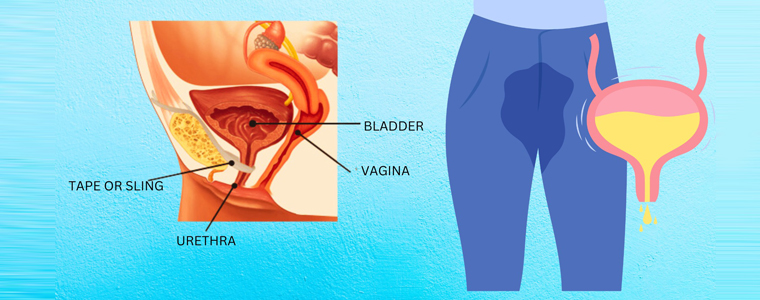
Urinary incontinence — the loss of bladder control — is a common and often embarrassing problem. The severity ranges from occasionally leaking urine when you cough or sneeze to having an urge to urinate that's so sudden and strong you don't get to a toilet in time.
Though it occurs more often as people get older, urinary incontinence isn't an inevitable consequence of aging. If urinary incontinence affects your daily activities, don't hesitate to see your doctor. For most people, simple lifestyle and dietary changes or medical care can treat symptoms of urinary incontinence.
Symptoms
Many people experience occasional, minor leaks of urine. Others may lose small to moderate amounts of urine more frequently. Types of urinary incontinence include:
• Stress incontinence. Urine leaks when you exert pressure on your bladder by coughing, sneezing, laughing, exercising or lifting something heavy.
• Urge incontinence. You have a sudden, intense urge to urinate followed by an involuntary loss of urine. You may need to urinate often, including throughout the night. Urge incontinence may be caused by a minor condition, such as infection, or a more severe condition such as a neurological disorder or diabetes.
• Overflow incontinence. You experience frequent or constant dribbling of urine due to a bladder that doesn't empty completely.
• Functional incontinence. A physical or mental impairment keeps you from making it to the toilet in time. For example, if you have severe arthritis, you may not be able to unbutton your pants quickly enough.
• Mixed incontinence. You experience more than one type of urinary incontinence — most often this refers to a combination of stress incontinence and urge incontinence.
What tests will be done to diagnose urinary incontinence?
A healthcare provider may order the following tests to help diagnose incontinence:
• Pelvic exam. A pelvic exam can help determine your pelvic muscle strength and make sure there are no other health problems that could cause incontinence.
• Digital rectal exam. A digital rectal exam can help a provider diagnose an enlarged prostate.
• Pee test (urinalysis). You’ll provide a pee sample, and a provider will examine it for signs of infection or blood in your pee (hematuria).
• Bladder ultrasound. An ultrasound is a painless test that allows a look at your bladder and checks how well you can empty pee.
• Stress test. If you notice that you leak during certain activities, like coughing, running or jumping, a provider may ask you to repeat the actions to see if you leak.
• Cystoscopy. A provider will insert a thin tube with a camera at the end (cystoscope) into your urethra and guide it up to your bladder to examine your urinary system. Most people don’t need a cystoscopy to check for incontinence.
• Urodynamic tests. This is a series of tests that check how much pee your bladder can hold, and how well you can hold pee and then empty your bladder.
• Pad test. A provider may give you a special pad to wear in your underwear, which will catch any pee that you may leak. At the end of the test, they’ll check the pad to see how much pee it contains.
How do you fix urinary incontinence?
It depends. A healthcare provider must diagnose the type of continence. They’ll also talk to you about the available treatments and help you choose the one you’re most comfortable with.The main types of urinary incontinence treatments are:
• Lifestyle changes
• Physical therapy
• Medications
• Surgery or other procedures